There are villains you fear, villains you admire, and villains you secretly understand. Then there’s Homelander — a character so unnervingly human beneath the cape that he stops feeling like fiction altogether.
In Amazon Prime’s The Boys, The Boys presents a world where superheroes are less noble guardians and more corporate weapons wrapped in celebrity branding. At the centre of that nightmare stands Homelander, the all-American icon with laser eyes, a movie-star smile, and the emotional stability of a collapsing dictatorship.
On paper, he looks like a twisted version of Superman. In practice, he’s something far more disturbing: a man raised without love, taught only performance, and handed absolute power before learning empathy. That contradiction is what makes Homelander one of modern television’s most fascinating antagonists. He isn’t just evil. He’s emotionally unfinished.
And audiences can’t look away.
Origin & Backstory
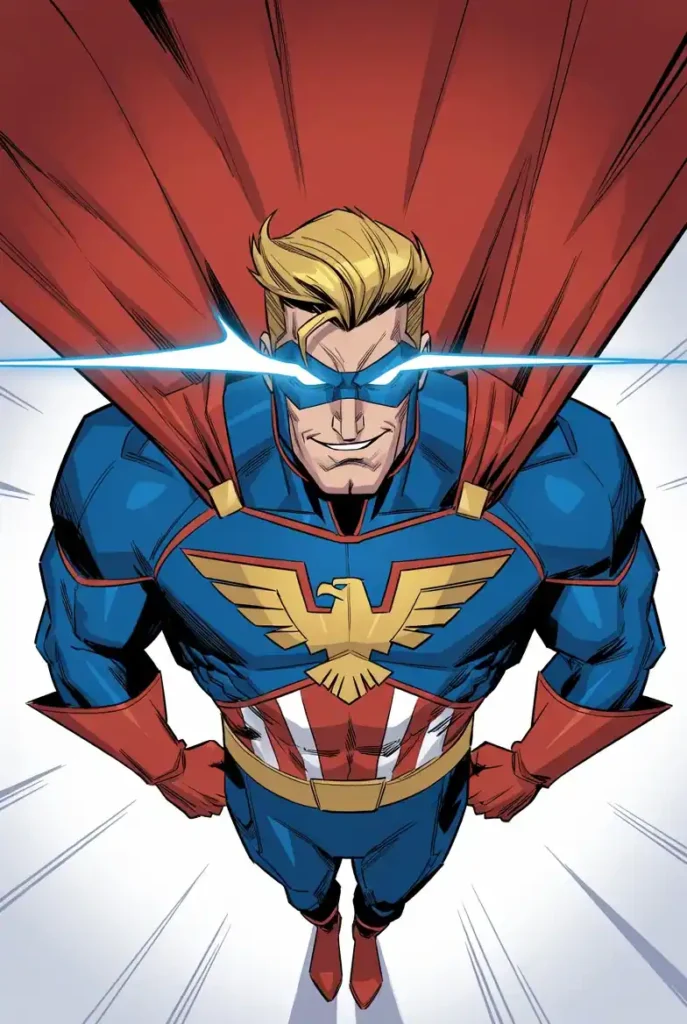
Who Is Homelander?
Homelander’s real name is John Gillman, though the series rarely uses it because “Homelander” isn’t just an identity — it’s a manufactured product. Publicly, he’s the patriotic leader of The Seven, Vought International’s premier superhero team. Privately, he’s the result of corporate experimentation gone catastrophically wrong.
Unlike most superheroes who gain powers through accidents or destiny, Homelander was engineered.
Homelander’s Parents Explained
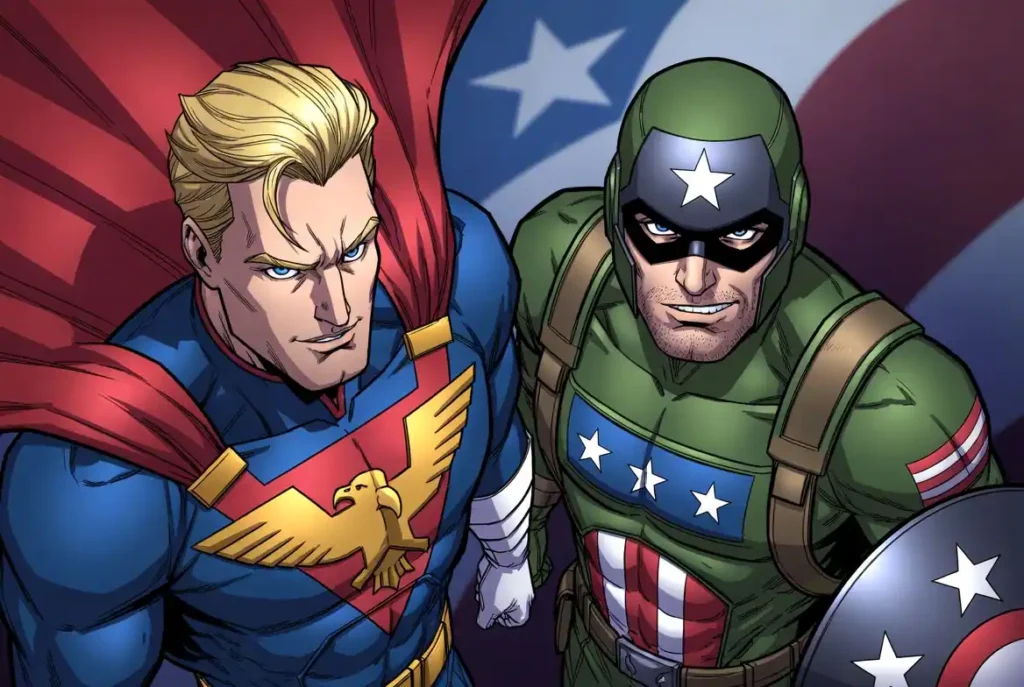
Biologically, Homelander was created using the DNA of Soldier Boy and the genetic material of a surrogate connected to Vought’s Compound V experiments. The company essentially built him in a lab, treating infancy like a military weapons program.
That detail matters more than fans sometimes realise.
Homelander wasn’t abandoned by parents in the traditional comic-book sense. He was denied parenthood entirely. No bedtime stories. No scraped-knee comfort. No emotional boundaries. Scientists observed him behind glass walls like an unstable reactor.
The result feels horrifyingly believable. Children develop empathy through attachment. Homelander developed performance instead.
Creation Behind the Scenes
Homelander was created by comic writer Garth Ennis and artist Darick Robertson for The Boys comic series. The television adaptation, led by Eric Kripke, transformed the character from a brutal satire into something psychologically richer and far more unsettling.
A huge part of that evolution comes from Antony Starr. His performance gives Homelander an eerie duality. One second, he’s grinning like a campaign mascot. Next, his face goes emotionally blank in a way that genuinely feels dangerous.
That unpredictability became the character’s signature.
Key Personality Traits & Psychology
The Need for Validation
Most villains crave power.
Homelander already has it.
What he actually wants is love.
That’s the tragic core of the character. Beneath the nationalism, narcissism, and explosive violence is a desperate child begging for approval. Every crowd cheer, every televised interview, every social media trend becomes emotional oxygen.
When audiences stop applauding, Homelander spirals.
It’s why criticism affects him more than physical threats ever could. Billy Butcher can hate him openly and survive. A disappointed public? That terrifies him.
Narcissism Mixed With Emotional Infantilization
Homelander behaves less like a traditional dictator and more like a spoiled child with godlike abilities. He lacks emotional regulation because nobody ever taught him restraint. Anger becomes destruction. Rejection becomes vengeance.
One of the smartest aspects of The Boys is how it portrays trauma without excusing cruelty.
The show never asks viewers to forgive Homelander. Instead, it explains how emotional deprivation mutated into pathological narcissism. He genuinely sees himself as superior to humanity while simultaneously craving human affection. That contradiction tears him apart internally.
Why He’s So Frightening
A lot of fictional villains hide their monstrosity.
Homelander performs sincerity.
That’s what makes him chilling in a media-saturated culture obsessed with branding and public image. He understands cameras better than morality. He knows how to appear heroic long before he knows how to be good.
There’s something painfully modern about that.
Major Story Arcs & Evolution
The Public Hero vs. The Private Monster
Early in The Boys, Homelander still cares deeply about maintaining his public image. He wants to be adored as America’s saviour, even while committing horrifying acts behind closed doors.
But over time, the mask starts slipping.
What makes this arc compelling isn’t simply that he becomes more violent. It’s that he becomes more honest about who he already was. The character evolves from someone hiding his impulses to someone increasingly comfortable displaying them publicly.
That transition mirrors real-world celebrity culture in uncomfortable ways. The show asks a brutal question: what happens when charisma becomes more important than ethics?
His Relationship With Fatherhood
Homelander’s connection with his son, Ryan Butcher, reveals another side of his psychology.
For the first time, he encounters someone who could love him naturally rather than through marketing campaigns or fear. Yet even here, Homelander approaches parenting like ownership. He wants Ryan to validate him emotionally while reshaping the boy into his own image.
The tragedy is obvious.
Homelander desperately wants the childhood he never had, but he lacks the emotional tools to create it for someone else.
The Slow Collapse of Restraint
Across later seasons, Homelander grows increasingly detached from social consequences. Once he realises many supporters will worship him regardless of his behaviour, his final psychological barrier disappears.
That development lands like a dark commentary on modern populism and celebrity immunity. The more outrageous he becomes, the more certain followers admire him.
Not because he hides the monster.
Because he stopped hiding it.
Relationships & Dynamics
Homelander vs. Billy Butcher
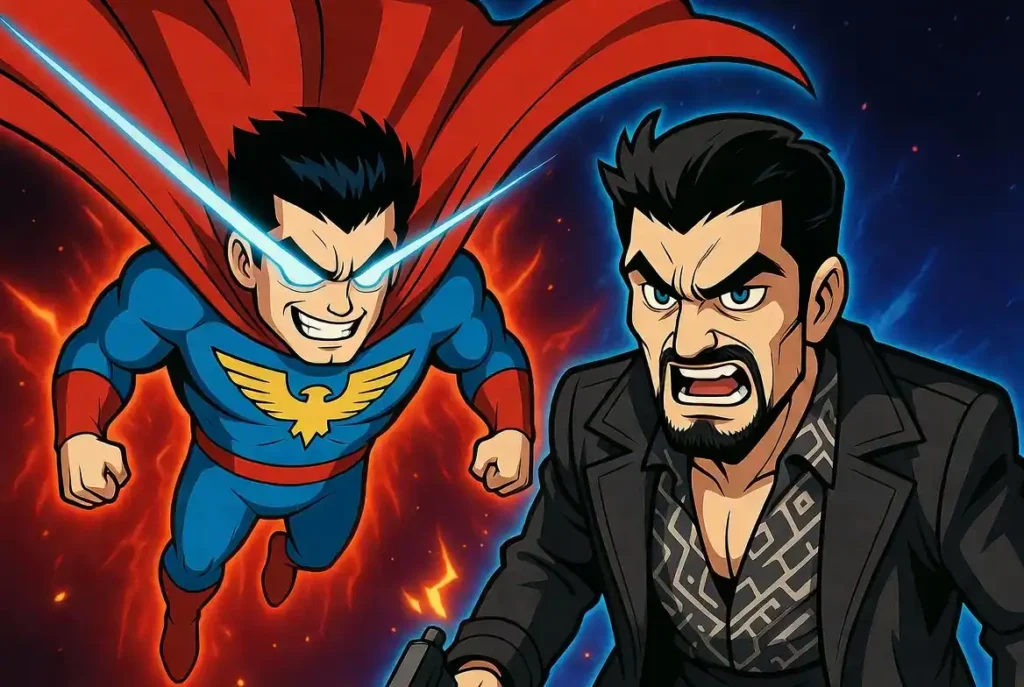
The rivalry between Homelander and Billy Butcher drives the emotional engine of The Boys.
They hate each other for deeply personal reasons, yet they’re disturbingly similar. Both men are fueled by trauma, rage, and obsession. The difference is that Butcher still possesses fragments of guilt and humanity. Homelander largely sees empathy as a weakness.
Their conflict works because it’s ideological as much as physical.
One believes power corrupts absolutely. The other believes power proves superiority.
Homelander and Starlight
Starlight represents everything Homelander can’t fully understand: genuine morality.
Her refusal to surrender emotionally frustrates him more than open rebellion. Homelander expects fear. What unsettles him is integrity. Starlight exposes the emptiness behind his patriotic performance simply by remaining authentic.
The Madelyn Stillwell Dynamic
Homelander’s relationship with Madelyn Stillwell remains one of the show’s most psychologically disturbing threads.
It blends maternal longing, corporate manipulation, emotional dependency, and sexual tension into something profoundly unhealthy. Stillwell understands Homelander’s emotional weaknesses and weaponises them professionally.
For a character starved of affection since birth, even manipulation feels intimate.
Homelander’s Powers Explained
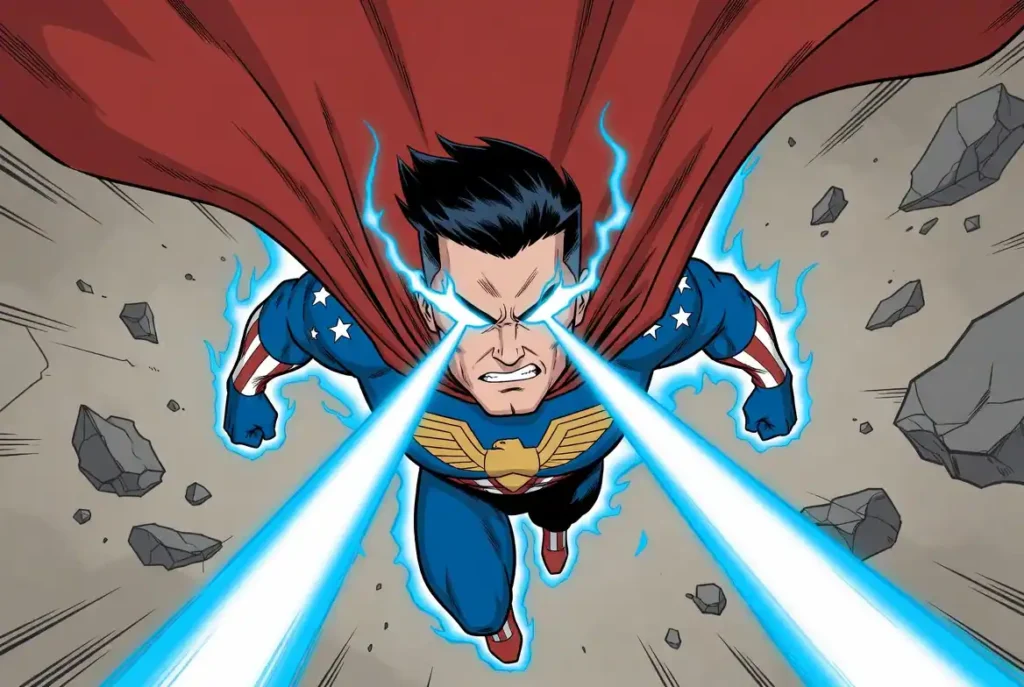
Homelander possesses abilities that place him far above nearly every supe in The Boys universe.
Core Powers
- Super strength capable of overwhelming most opponents
- Heat vision is powerful enough to slice through humans instantly
- Flight at extreme speeds
- Enhanced hearing and vision
- Near invulnerability
- Accelerated durability and stamina
Why His Powers Matter Narratively
The terrifying part isn’t just what Homelander can do physically.
It’s that almost nobody can stop him.
Traditional superhero stories usually balance power with morality. Homelander breaks that formula entirely. He has the abilities of a classic comic-book saviour without the ethical framework that normally accompanies them.
That imbalance creates constant tension in The Boys. Every conversation with Homelander feels dangerous because violence is always seconds away.
Cultural Impact & Legacy
Homelander arrived during an era deeply sceptical of institutions, celebrity worship, and corporate patriotism. That timing matters.
He isn’t merely a parody of Superman. He’s a satire of performative American exceptionalism, influencer culture, and media-manufactured heroism. Vought sells morality the same way corporations sell fast food or smartphones — through branding.
Audiences responded because the character feels uncomfortably plausible.
Why Fans Are Fascinated By Him
People don’t love Homelander because he’s relatable in a traditional sense. They’re fascinated because he exposes ugly truths about power and validation.
He embodies:
- Toxic celebrity culture
- Fragile masculinity
- Authoritarian narcissism
- Emotional isolation
- The corruption of unchecked power
And somehow, despite all of that, viewers occasionally pity him.
That emotional confusion is exactly what makes the character brilliant.
Antony Starr’s Influence
It’s impossible to separate Homelander’s cultural legacy from Antony Starr’s performance. He plays the character with tiny facial shifts and unnerving pauses that make ordinary scenes feel threatening.
Even smiling, Homelander looks like someone barely suppressing violence.
That tension turned him into one of television’s most discussed modern villains.
Conclusion
Homelander works because he isn’t simply written as a monster.
He’s written as a damaged human being who gained the powers of a god before developing the conscience of an adult.
That distinction changes everything.
Underneath the cape, patriotic speeches, and terrifying strength is a lonely child raised by corporations instead of parents — a man who confuses attention with love and obedience with respect. The Boys uses Homelander not just to deconstruct superheroes, but to dissect modern culture itself: our addiction to spectacle, our obsession with celebrity, and our willingness to forgive almost anything if the branding is good enough.
Few fictional characters feel this relevant.
Even fewer feel this is dangerous.